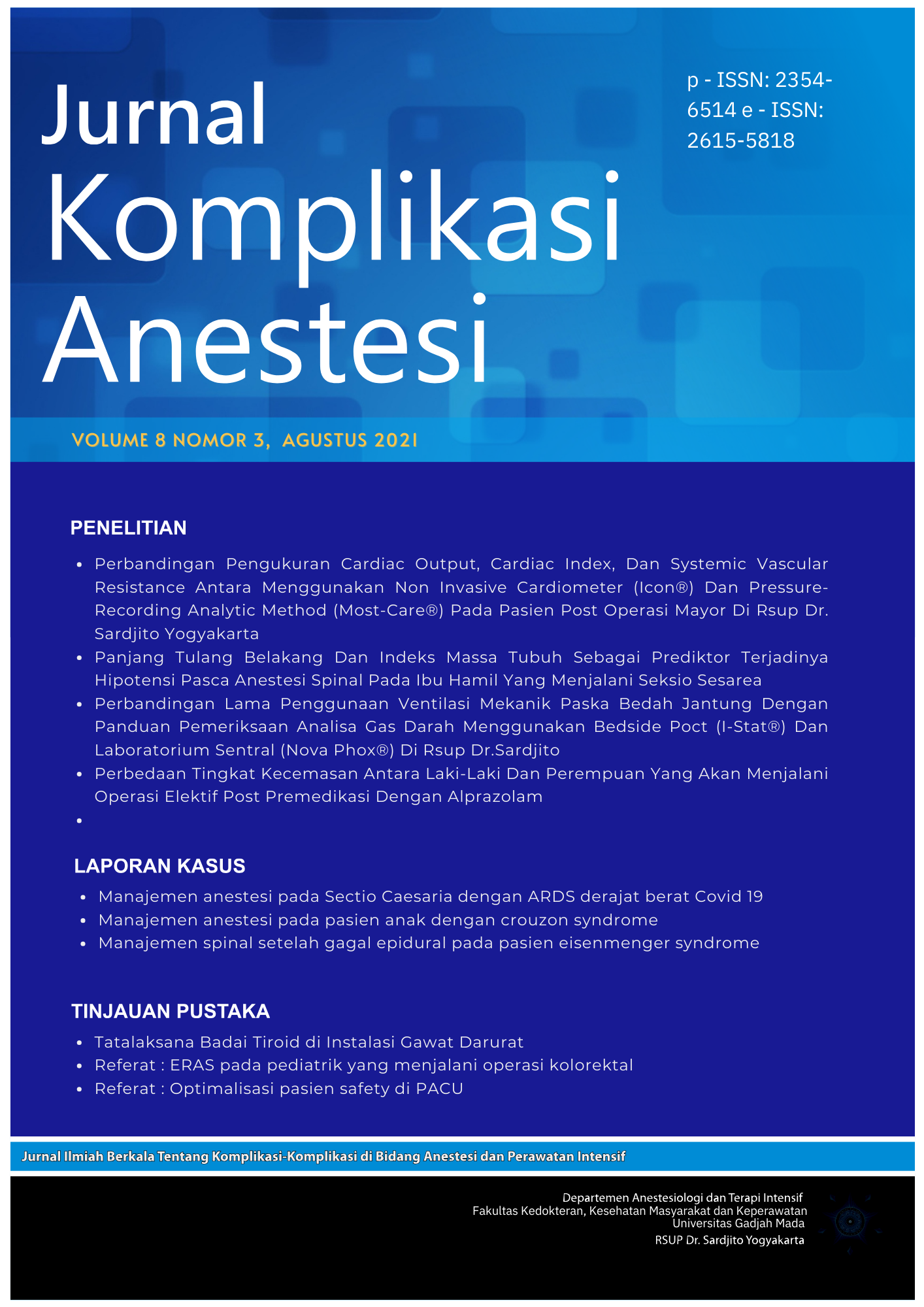
Subarachnoid Block after Failed Epidural Anesthesia
DOI:
https://doi.org/10.22146/jka.v8i3.8371Keywords:
Eisenmenger syndrome, low dose SAB, pregnancyAbstract
Pregnant woman with cardiac abnormality was associated with substantial fetomaternal risk. Uncorrected cardiac abnormality associated with R to L shunting (such as ventricle septum defect) may cause chronic over volume which may cause progressive hypoxemia and cardiac failure which is known as Eisenmenger Syndrome. We reported a 27 years old woman with G1P0A0, Eisenmengersyndrome planned for emergency caesarean section post failed termination with induction. There was failed epidural block, so we used a low dose subarachnoid block as an alternative. There is no ideal anesthesia technique for Eisenmenger syndrome, thus every technique carried its own risk. In regional anesthesia, the risks that may happen include decreased SVR, increased R to L shunt, and hypoxemia exacerbation. According to the literature, low dose SAB as used in this case was already followed the principle of failed epidural anesthesia.
Downloads
Published
How to Cite
Issue
Section
License
The Contributor and the company/institution agree that all copies of the Final Published
Version or any part thereof distributed or posted by them in print or electronic format as permitted herein will include the notice of copyright as stipulated in the Journal and a full citation to the Journal.